You ate more than you intended.
Maybe it happened quickly. Maybe you felt like you couldn’t stop. Maybe you were alone, stressed, or overwhelmed.
Now you’re sitting with that uncomfortable feeling afterward.
You might be thinking:
“Why did I do that again?”
“I have absolutely no self-control.”
“Tomorrow I’m not eating anything.”
If you’ve experienced these thoughts, you know how painful the aftermath of binge eating can feel.
But what you do next matters.
And the most helpful response usually isn’t punishment.
First, You Don’t Need to Punish Yourself
One difficult eating episode doesn’t define who you are.
Binge eating can be influenced by a combination of emotional, behavioral, biological, and environmental factors.
It’s not simply a matter of being weak or lacking discipline.
Responding with harsh self-criticism may increase distress and make it harder to address what contributed to the episode.
Instead, begin with a more compassionate question:
“What do I need right now?”
1. Avoid the Urge to Restrict Food Tomorrow
After eating more than intended, it’s tempting to promise yourself that you’ll skip breakfast, eliminate carbohydrates, or follow an extremely strict diet.
But restrictive eating and skipped meals can contribute to cycles of intense hunger and binge eating.
Rather than compensating, return to regular, adequate meals and snacks.
Your body still needs nourishment.
2. Don’t Try to Exercise Away What You Ate
Movement can be enjoyable and beneficial.
But using excessive exercise to punish yourself for eating can become harmful.
You don’t have to earn food, and you don’t have to burn off a meal to deserve a fresh start.
Choose movement because it supports your well-being, not because you feel obligated to make up for what happened.
3. Notice What Happened Before the Episode
When you’re feeling calmer, consider what may have contributed.
Were you:
- Physically hungry after skipping meals?
- Overwhelmed by work or family responsibilities?
- Feeling lonely, sad, or frustrated?
- Exhausted after a long day?
- Following strict food rules?
- Eating automatically during a familiar routine?
You don’t have to analyze every detail immediately.
The purpose is to understand your patterns, not interrogate yourself.
4. Separate the Behavior From Your Identity
There’s a big difference between saying:
“I experienced a binge eating episode.”
And saying:
“I’m a failure.”
The first describes something that happened.
The second turns a difficult experience into a judgment about your worth.
You can take steps toward changing a behavior without attacking yourself.
5. Give Yourself Permission to Move Forward
You don’t need to wait until Monday.
You don’t need a detox.
You don’t need a new diet.
You can simply return to your normal routine and focus on caring for yourself.
Progress doesn’t require a perfect record.
It requires opportunities to learn, practice, and continue.
6. Create a Plan for Your Next Difficult Moment
Instead of making another promise to never binge again, consider creating a practical plan.
For example:
“When I notice that I’m overwhelmed and want to eat for comfort, I’ll check whether I’m hungry, take a short pause if appropriate, and decide what support I need.”
You could also identify someone you trust, establish more consistent meals, or seek professional guidance.
A flexible plan can be more useful than rigid rules.
7. Know When to Ask for Additional Help
If binge eating happens frequently, involves feeling out of control, or causes significant emotional distress, consider seeking help from a healthcare professional experienced in eating disorders.
Binge eating disorder is a recognized condition, and effective treatments are available.
You deserve appropriate support, especially if you’ve been struggling alone for a long time.
Breaking the Cycle Starts with Understanding
Many people become caught in a recurring pattern:
Stress → Eating → Guilt → Restriction → Increased Hunger or Stress → More Eating
Not everyone’s experience follows this exact sequence, but recognizing your own cycle can help you understand where change is possible.
You don’t have to solve everything in one day.
Start with compassion, consistent nourishment, and curiosity about what happened.
Just Break The Loop: Support for Building New Habits
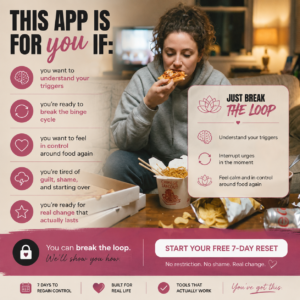
Just Break The Loop was created to help people recognize and interrupt recurring emotional eating, sugar craving, and nighttime eating patterns.
With daily check-ins, guided 14-day resets, and in-the-moment urge tools, the app encourages awareness and practice without relying on another restrictive diet.
Just Break The Loop is not a treatment for binge eating disorder, but it can serve as an additional habit-awareness resource alongside appropriate professional support.
Your next choice doesn’t have to be shaped by guilt. It can be shaped by understanding.
Learn More About Just Break The Loop and Start Your 7-Day Free Trial
If you experience repeated binge eating episodes, loss of control, or significant distress around food, speak with a qualified healthcare professional or eating disorder specialist.