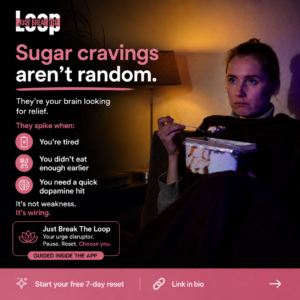
A food craving can feel incredibly powerful.
One minute you’re going about your day, and the next, you’re thinking about chocolate, chips, ice cream, or your favorite comfort food.
The urge can feel urgent, almost like you have to do something about it immediately.
But here’s something worth understanding:
An urge is a feeling, not a command.
Sometimes, you can notice a craving without immediately acting on it.
One technique that may help is called urge surfing.
What Is Urge Surfing?
Urge surfing is a mindfulness-based technique that involves observing an urge as it changes rather than automatically reacting to it.
Imagine an ocean wave.
It begins to rise, grows stronger, reaches a peak, and eventually changes or settles.
Cravings can sometimes follow a similar pattern.
Instead of trying to fight the urge or make it disappear, urge surfing encourages you to notice what you’re experiencing with curiosity.
The goal isn’t to force yourself to ignore hunger.
It’s to create a moment of choice when an automatic, non-hunger-related eating habit appears.
Why Food Cravings Can Feel So Urgent
Cravings may be influenced by stress, emotions, environment, learned habits, and physical hunger.
For example, you might consistently eat something sweet while watching television.
Eventually, sitting down to watch your favorite show may trigger a craving even when you aren’t physically hungry.
Your mind begins anticipating the familiar experience.
That doesn’t mean you have to eliminate the food or avoid television forever.
It means you can practice becoming aware of the connection.
How to Practice Urge Surfing in 5 Steps
Step 1: Notice the Urge
When a craving appears, pause.
Instead of immediately reaching for food, say to yourself:
“I’m noticing an urge to eat.”
You don’t need to criticize yourself or make the feeling go away.
Simply recognize that it’s happening.
Step 2: Check In With Your Body
Ask yourself whether you’re physically hungry.
When did you last eat? Have you eaten enough today? Do you need a meal or snack?
If you’re hungry, nourish yourself.
Urge surfing isn’t intended to override your body’s hunger signals.
If the urge seems connected to stress, boredom, or a familiar routine, you can explore it further.
Step 3: Observe the Sensation
Notice what the urge feels like.
Do you feel restless?
Are you thinking repeatedly about a particular food?
Do you feel tension in your shoulders or stomach?
Observe those sensations without judgment.
You might remind yourself:
“This is uncomfortable, but I can take a moment to notice it.”
Step 4: Breathe and Allow the Feeling to Change
Take a few gentle, slow breaths.
You can try breathing in for four counts, holding comfortably for four, and breathing out for six.
If holding your breath feels uncomfortable, skip the hold.
As you breathe, notice whether the urge changes in intensity.
It may become weaker, stronger, or simply different.
There’s no requirement for it to disappear.
Step 5: Make a Conscious Choice
After a brief pause, ask yourself what you need.
Maybe you want a satisfying snack.
Maybe you need relaxation, movement, connection, or a break from a stressful situation.
The goal is not to make the “perfect” decision.
The goal is to move from automatic behavior toward a more intentional response.
What If the Craving Doesn’t Go Away?
That’s okay.
Urge surfing isn’t guaranteed to eliminate cravings, and some urges reflect genuine hunger or unmet needs.
You’re not failing if you still decide to eat.
Even noticing the urge before acting can be useful practice.
Over time, becoming more familiar with your personal triggers may help you respond to them with greater flexibility.
Why Small Pauses Matter
When eating has become automatic, you may feel like the decision happens before you’ve had time to think.
A short pause creates an opportunity to check in.
You might discover you’re tired, frustrated, bored, or actually hungry.
That awareness can be valuable even if your behavior doesn’t change immediately.
Practice the Pause with Just Break The Loop
Just Break The Loop includes in-the-moment tools designed to support you when cravings or emotional eating urges appear.
The app’s Urge Disruptor includes guided breathing, grounding exercises, and short reset timers to help you pause and reconnect with your choices.
You can also explore guided 14-day programs focused on sugar cravings, nighttime eating, and emotional eating patterns.
Building new habits doesn’t require perfection.
Sometimes, it begins with one intentional pause.
Ready to practice responding differently to cravings?
Try Just Break The Loop Free for 7 Days
Mindfulness techniques can complement professional care but are not a substitute for eating disorder treatment. If cravings involve ongoing distress or loss of control, consult a qualified professional.