Have you ever walked into the kitchen, opened the refrigerator, and started looking for something to eat—even though you weren’t actually hungry?
Maybe you just finished dinner. Maybe you’re bored, stressed, or exhausted. Or maybe eating has become something you do automatically, without even thinking about it.
If this sounds familiar, you’re not alone.
Eating when you’re not physically hungry doesn’t necessarily mean you lack self-control. Food serves many purposes beyond satisfying hunger, and sometimes our eating patterns become connected to emotions, routines, and learned behaviors.
Understanding what’s driving the urge is often the first step toward changing it.
1. You’re Eating to Manage Stress
After a difficult day, food can feel like comfort.
Stress can influence appetite and food choices. For some people, eating becomes a familiar way to unwind, distract themselves, or temporarily feel better.
The problem isn’t enjoying comforting food. It’s when eating becomes your only reliable way to manage difficult emotions.
Try this: Before reaching for food, ask yourself: “What am I feeling right now, and what would actually help?”
You may still choose to eat. The important difference is making that choice with awareness.
2. You’re Bored, Not Hungry
Boredom can make food seem especially appealing.
When you’re watching television, scrolling through your phone, or waiting for something to happen, eating can provide stimulation and entertainment.
Over time, your brain may begin to associate certain activities with snacking.
Try this: Change your environment for a few minutes. Walk outside, listen to music, call someone, or work on an activity you enjoy.
If you’re hungry, eating is still appropriate. The goal is simply to recognize whether boredom is influencing the decision.
3. You’ve Developed an Automatic Eating Habit
Sometimes eating isn’t a conscious decision at all.
You might automatically grab a snack when you sit on the couch, walk through the kitchen, or turn on your favorite television show.
These repeated behaviors can become habit loops.
A familiar situation triggers an urge, you respond by eating, and the behavior becomes more automatic with repetition.
Try this: Identify one situation when you regularly reach for food without thinking. Practice noticing the urge before responding.
4. You’re Tired and Looking for Energy
Exhaustion can affect your appetite, mood, and decision-making.
When you’re tired, quick and convenient foods can become especially appealing. You may also mistake the desire for stimulation or comfort for a need to eat.
But sometimes tiredness and hunger occur together, particularly if you haven’t eaten enough during the day.
Try this: Check whether you need food, rest, hydration, or a combination of these.
5. You’re Using Food as a Reward
You worked hard. You handled a stressful situation. You made it through another busy day.
Now you feel like you deserve something.
There’s nothing wrong with enjoying food as part of life’s pleasures. But if food is your primary reward, the habit can become difficult to change.
Try this: Build a list of enjoyable rewards that aren’t food-related, such as a relaxing bath, a favorite podcast, or time for a hobby.
6. You’re Restricting Food Earlier in the Day
Sometimes the reason you’re eating more later is simple: your body needs nourishment.
Skipping meals, eating too little, or following rigid food rules can contribute to intense hunger and overeating later.
This is an important distinction because not every strong desire to eat is emotional.
Try this: Look at your overall eating pattern before assuming a craving is purely psychological. Regular, adequate meals can help support more consistent eating.
7. You’re Trying to Avoid an Uncomfortable Feeling
Loneliness, frustration, sadness, anxiety, and overwhelm can all influence eating behavior.
Food may offer temporary relief from feelings that are difficult to sit with.
But when the original emotion returns, the desire to eat may return too.
Try this: Take a moment to name the emotion. Then ask yourself what kind of support or comfort you need.
How to Start Changing the Pattern
You don’t need to eliminate every craving or question every bite you eat.
Instead, begin by noticing patterns:
- When do you most often eat without physical hunger?
- What happened immediately before the urge?
- What emotions were present?
- What would help you feel supported in that moment?
With practice, these observations can help you recognize automatic behaviors and create opportunities for different responses.
Just Break The Loop Can Help You Build Awareness
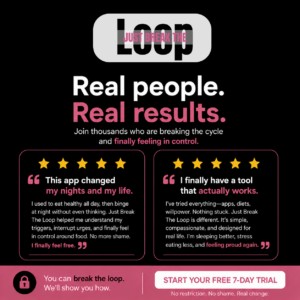
Just Break The Loop was designed for people who struggle with emotional eating, sugar cravings, nighttime eating, and recurring eating habits.
The app includes daily check-ins, guided 14-day reset programs, and in-the-moment tools to help you pause, identify patterns, and practice alternative responses.
You don’t need another restrictive diet or another reason to criticize yourself.
You can start by understanding your patterns, one moment at a time.
Ready to build a healthier relationship with your eating habits?
Explore Just Break The Loop and Start Your 7-Day Free Trial
Just Break The Loop is a self-help habit-support app and is not a substitute for medical care or professional eating disorder treatment.