Why evenings can feel so difficult
You may make thoughtful choices all day and then feel as if everything changes after dinner. The kitchen starts calling. One snack becomes several, and the familiar promise appears: tomorrow will be different.
Nighttime eating is common because evenings bring several triggers together. You may be tired, stressed, finally alone, underfed from the day, or following a routine your brain has practiced for years. The answer is not always more discipline. It is finding the part of the evening loop that needs support.
Make sure you are eating enough during the day
If you skip meals, eat very little, or try to be ‘good’ all day, your body may push back at night. A strong evening appetite can be a normal response to insufficient food earlier. Regular meals that include protein, fiber-rich carbohydrates, and satisfying fats can make the evening feel less urgent.
Before labeling nighttime eating as emotional, honestly review the day. Did you eat breakfast or lunch? Was dinner satisfying? Have you been avoiding foods you enjoy? Sometimes the most effective nighttime strategy begins hours before sunset.
Find your evening trigger
Look for the moment the pattern begins. Is it when you sit on the couch, finish cleaning the kitchen, start scrolling, feel tension with someone, or realize the day is over? The trigger may be emotional, environmental, or simply tied to the clock.
Once you identify the cue, change one part of the routine. Sit in a different chair. Make tea. Brush your teeth. Lower the lights. Take a shower. Begin a hobby that occupies your hands. The replacement does not need to be impressive; it needs to interrupt the familiar path from cue to eating.
Use a planned pause instead of a hard rule
A rule such as ‘I can never eat after 7 p.m.’ may sound clear, but it can also create pressure and rebound eating. Try a more flexible plan: when the urge arrives, pause for five or ten minutes before deciding. During that time, breathe slowly, move away from the kitchen, and ask whether you are hungry, seeking comfort, or trying to extend the pleasure of the day.
If you are hungry, have a planned, satisfying snack and eat it attentively. If you are not hungry, choose a closing ritual that tells your mind the eating portion of the evening is finished. Repeating the same ritual can help establish a new cue over time.
Do not let one night become a verdict
Progress may look uneven. Some evenings will feel easy, while others will bring a strong urge. Instead of grading the entire day, notice one thing you learned: the time, trigger, feeling, food pattern, or interruption that helped. That information is useful.
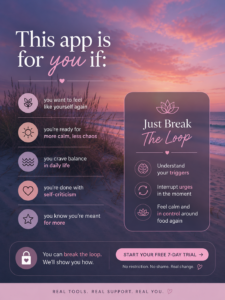
The Fix Your Nighttime Eating program in Just Break The Loop provides a focused 14-day path for understanding evening triggers and practicing a different response. When the urge is happening now, use the app’s short timers and calming tools to create space before your next choice.
Important note: Just Break The Loop is a self-help tool and is not a substitute for professional medical care, nutrition care, or treatment for an eating disorder. If eating feels unsafe, out of control, or physically harmful, contact a qualified healthcare professional.